


 |
 |
 |
 |
 |
 |
 |
 |
 |
 |
 |
 |
 |
 |
 |
 |
Classification: systems and philosophies
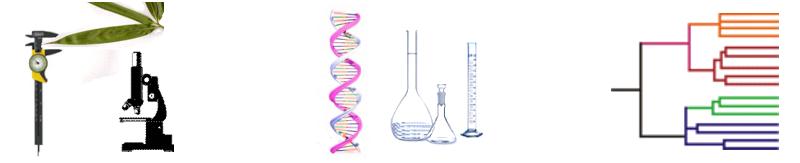
Humans classify plants for the same reasons they classify other groups of objects, to help to understand their complexity and to refer to them accurately. The early classification systems for plants relied solely on visible characteristics. The groupings were often very artificial, not reflecting genetic relationships between groups of plants, although easy to apply for identification purposes. Later systems aimed to be more natural, ideally reflecting the evolution of plants very closely. However, this has involved the use of cryptic characters, such as chromosome details and molecular information including DNA sequences, which, although ostensibly leading to more natural groupings, are often very difficult to use for plant recognition. The invaluable concepts of species and genus have also often proven to be rather artificial, and this ‘binomial’ system, used for plant names since Linnaeus, is also under threat. The path to scientifically rigorous and fully objective methodologies and classification systems could lead to abandonment not only of the use of morphological characters that allow plant recognition, but also the loss of the the binomial principal of names for species and genera. Taken to extremes, applicable and useful classification systems could be supplanted by inconsistent, often dysfunctional hierarchies, changing with each new cryptic molecular character investigated.
Despite this trend, plant evolution has often been so complex that a fully natural system has proven much more difficult to elucidate than expected, especially at the business end of the rankings--genera and species, and especially for groups that interbreed freely to give a reticulate evolution pattern, such as the bamboos. When the new classifications fail to be accurate, consistent, or conclusive, the wisdom of abandoning more pragmatic but admittedly somewhat artificial systems is called into question. Fortunately for the users of plants and their names, the good old systems of species and genera classified by old-fashioned visible characters, have never really gone away, and are currently witnessing a resurgence, strengthened by the evolutionary insights given by molecular investigations, but not entirely supplanted by them.
|
|||||||||||||||||||||||||||||||||


Phenetic classifications have traditionally been applied in the descriptions produced for flora treatments, accompanied by keys and illustrations of the characters used to distinguish plants. Molecular analyses are used to infer past evolution and judge current relationships to give a phylogenetic classification, usually expressed in trees known as cladograms, and results are not necessarily incorporated into the naming, description, or identification of plants. Opinions differ as to how much molecular data is relevant or useful. Trees from early molecular research on bamboo phylogeny are presented on this site, from work in Dublin & Kew and in Yunnan. Such trees are being incorporated into Treebase, an online database of considerable complexity....
