How to identify bamboos
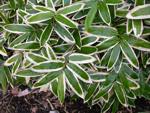
The best way to identify bamboos will depend upon the time available, botanical knowledge and interest, and also the accuracy required. Different avenues can be pursued, so pick one of the 7 methods given below. Some potential pitfalls to remember include the use of different, conflicting names in books, nurseries and collections, and inaccurate or missing labels/names on plants and in photos. In addition the taxonomy is still in a primitive state relative to most other plants. A substantial proportion of bamboos in the wild still simply cannot be identified as they have never been studied properly, but cultivated species are becoming better known. More...
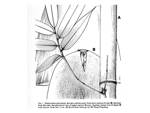
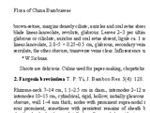
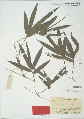
... More Photos of cultivated bamboos are coming onto the internet thick and fast, but they vary in quality, and accuracy of identification. Botanical drawings are usually highly accurate and reliable, but are few and far between, and usually strictly copyright, although basic drawings of Chinese bamboos from the Flora of China Project have now been included in the online descriptions. Formal descriptions are getting better, but are still often somewhat disappointing in detail and comparability. Living collections are inspiring but often mislabelled. Keys have a nasty habit of requiring information on parts of the plant that are unavailable. Herbarium material is often fragmentary or locked away, and very different in appearance from the living plant. Books are available, but names in them can be out of date. Asking specialists will often result in different names from different people. All methods of identification currently have some drawbacks, so there is a pressing need to work on them all to improve the quality of available information on how to identify bamboos.
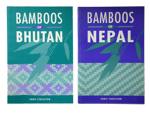
Currently horticulturalists tend to identify by overall clump characteristics that may not be clearly defined and are often hard to compare objectively. Descriptions in some coffee table books are in this category, although the better ones often have excellent detailed descriptions that are better than the botanical descriptions available. University and botanic garden herbarium scientists have tended to move away from morphology into molecular analysis, and away from identification to evolutionary relationships. The journal articles they need to publish to maintain their funding tend to give less pragmatic information than could be hoped for by those simply wanting good names and descriptions.
The Cultivated Bamboos section of this site is an ongoing project hoping to provide accurate and reliable names and descriptions, and combine them with close-up photos of the most important characters. It is hoped that this will make it easier to identify bamboos. The work ought to be combined with studies of the bamboos in their native habitats, and will require taxonomic and nomenclatural investigations before it can be considered complete, so it may take some time to complete... Funding, collaboration, and reincarnation will be required for this work to be completed properly.
In order to know how to identify bamboos accurately, it is necessary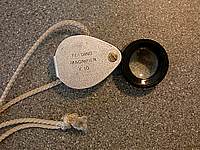 to understand the morphology and the terms that are used to describe the different organs. For an overview of the use of characters for identification of genera and species see Identification of Hardy Bamboos. The characters of importance for each species will be illustrated in the Cultivated Bamboos pages. In-depth analysis is given in the morphology section. to understand the morphology and the terms that are used to describe the different organs. For an overview of the use of characters for identification of genera and species see Identification of Hardy Bamboos. The characters of importance for each species will be illustrated in the Cultivated Bamboos pages. In-depth analysis is given in the morphology section.
If you are serious about identification and understanding bamboo morphology, then a hand lens, or jeweller’s loupe, is a very useful tool indeed. To check the kind of details given in good close up photos or keys, unaided eyesight is often not sufficient, especially for the smaller, temperate bamboos. The folding 21mm type are most pocketable and readily available on eBay. Don’t worry about quality. Even the cheapest Christmas cracker ones with plastic lenses make a dramatic difference, especially for older eyes, and an investment of 2-3£/€/$ for a real glass one may be the best investment you ever make. A magnification of x10 is perfect for seeing bamboo details, and very handy for getting splinters out too.
|